[INTRODUCTION ]
Understanding the Vision
The project presents a contemporary mixed-use office development located at Morris Street, designed to create a professional, innovative, and visually engaging work environment. The overall architectural expression combines modern minimalism with functional planning, ensuring that both the interior and exterior spaces reflect sophistication, efficiency, and strong brand identity. The design approach focused on achieving spatial fluidity, user comfort, adequate natural lighting, and a balance between aesthetics and practicality.
The development adopts a modern corporate style characterized by clean lines, geometric forms, open-plan spaces, and a neutral material palette complemented with accent colors and greenery. Strategically situated within the vibrant commercial and technological hub of Yaba, Lagos, the project responds to its urban context by creating a visually striking architectural presence while maintaining functionality and accessibility. The project was conceptualized to promote productivity, collaboration, and comfort while maintaining a strong architectural presence externally.
[Challenges]
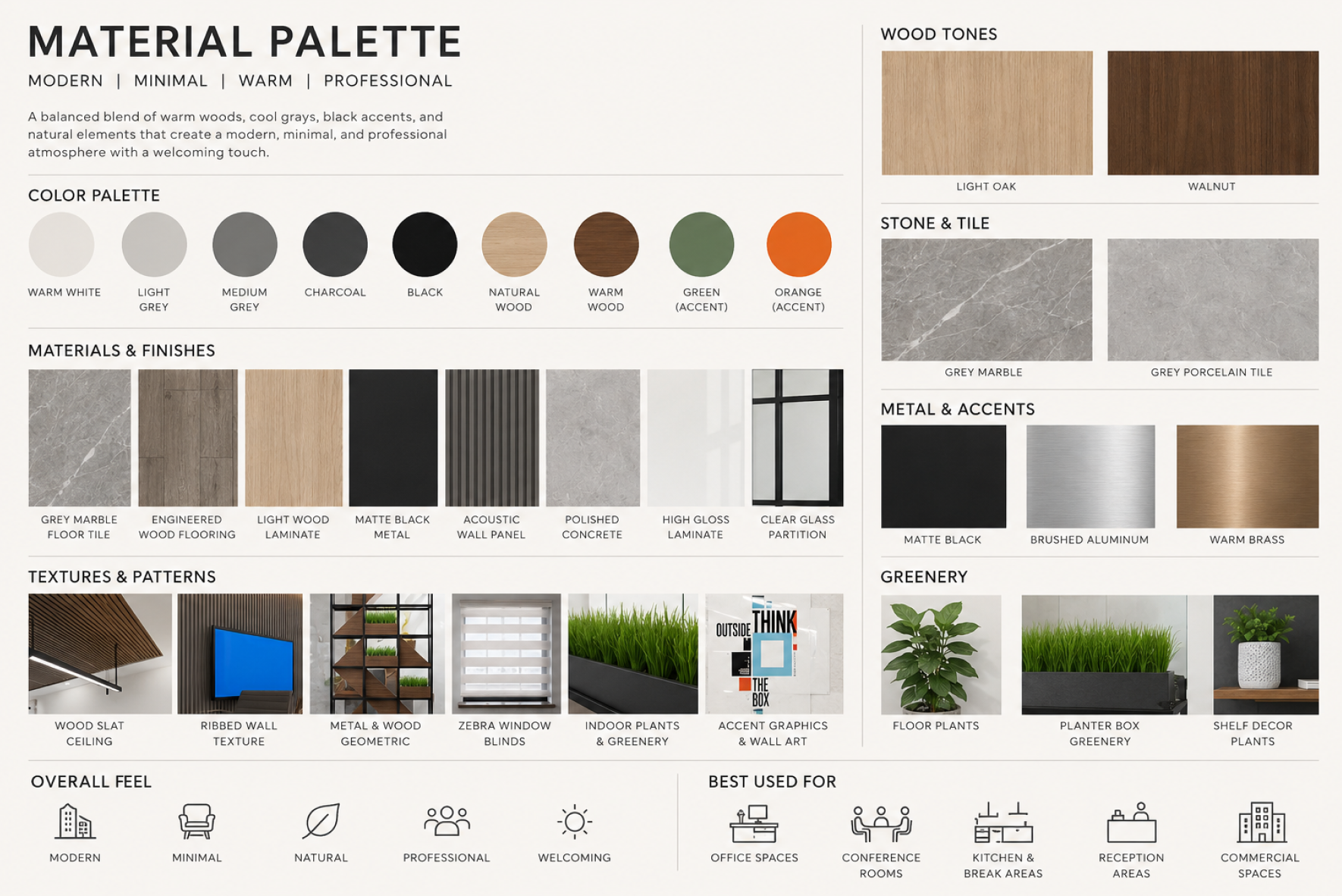
Color, Material & Palette Selection
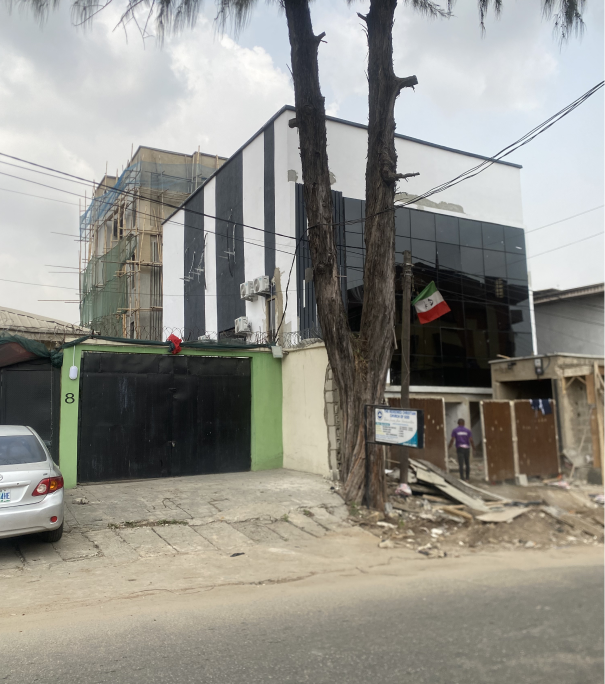
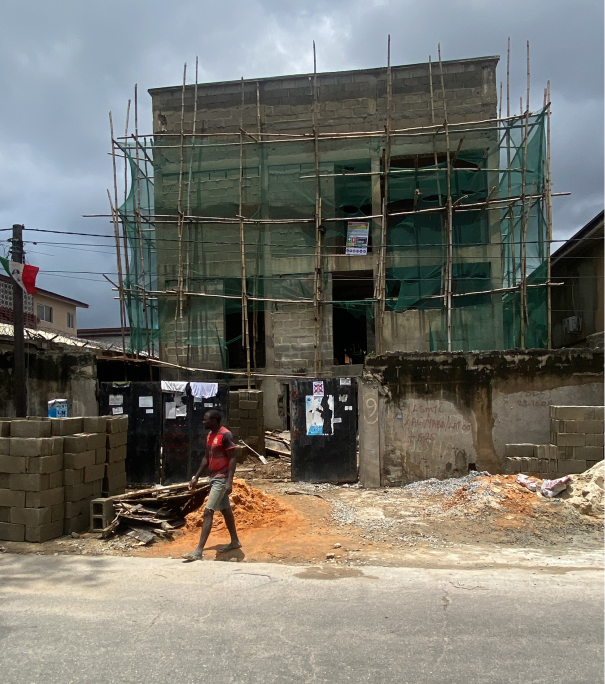
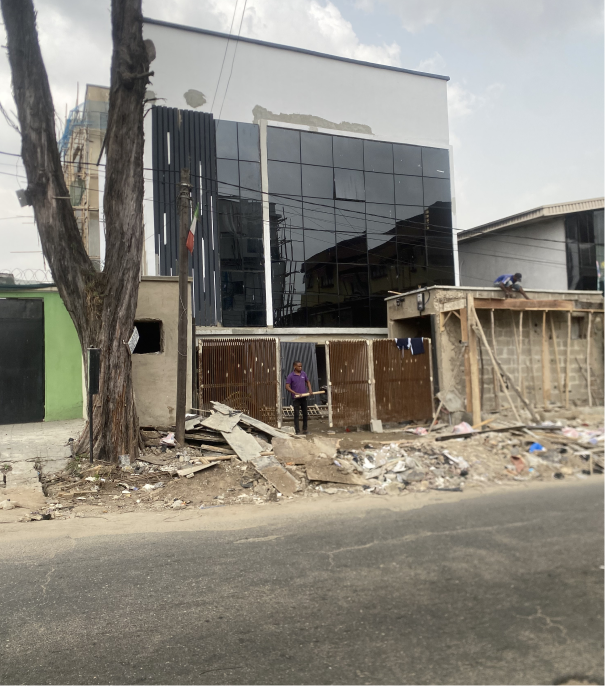
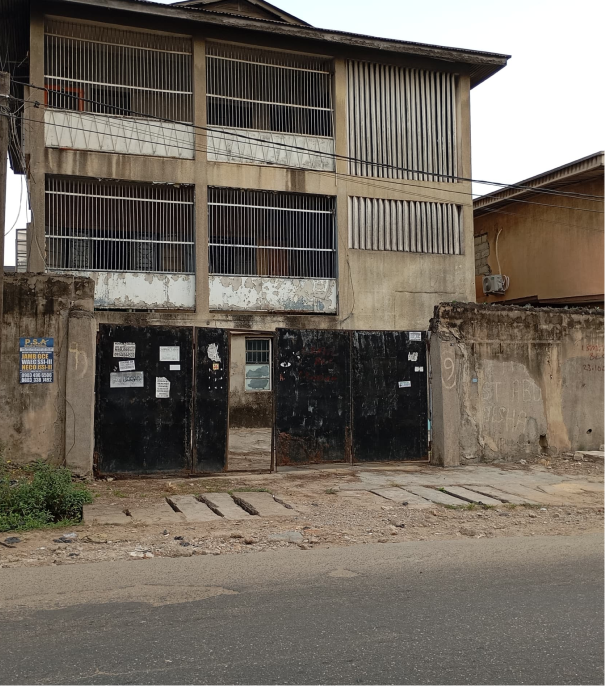
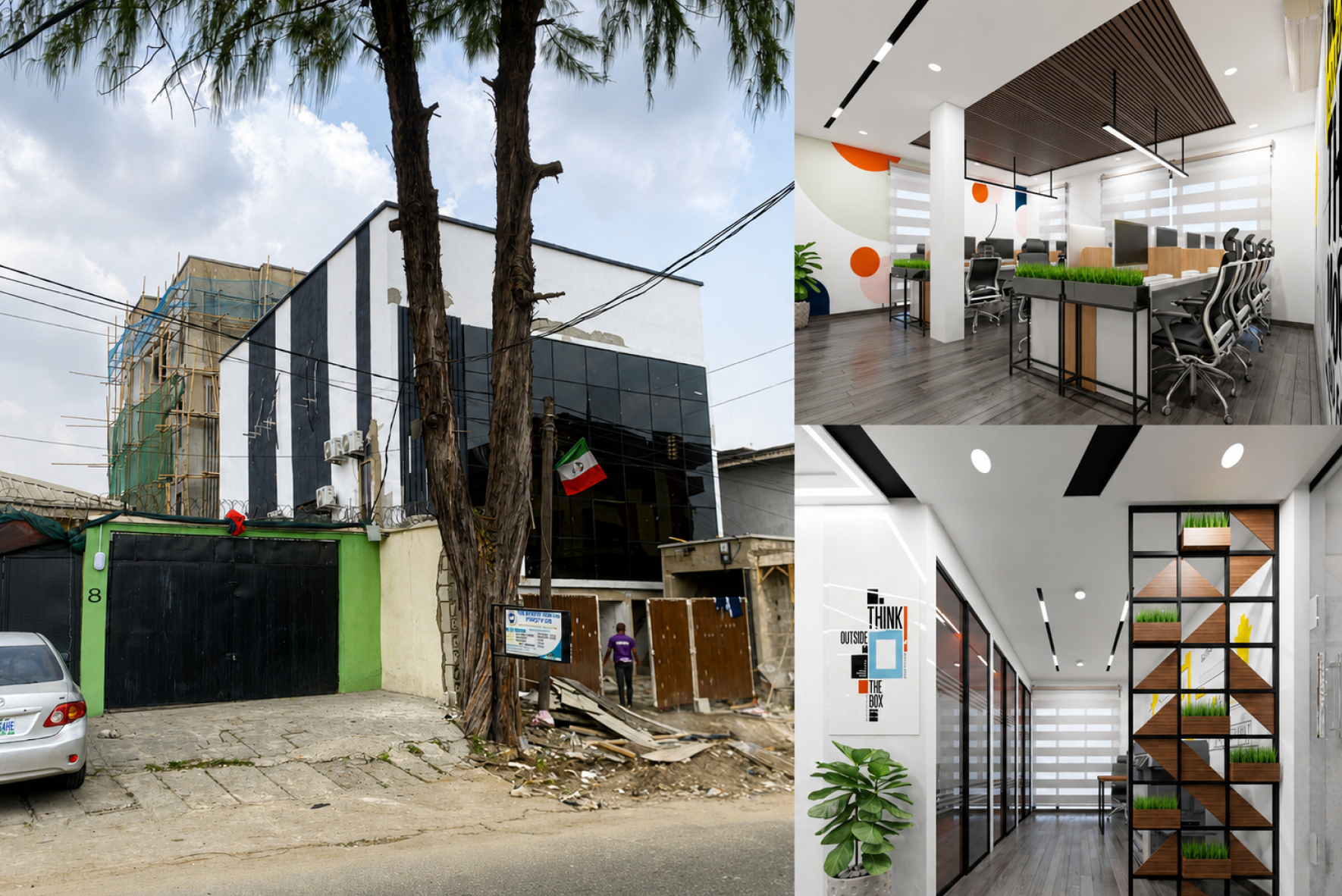
The project involved the renovation of an existing two-story building situated at the front of the site and the construction of a new three-story building at the rear. The client’s vision was to transform the property into a modern commercial development that would maximize leasable office space, improve user convenience, and provide a flexible open-plan studio environment. While the project ultimately achieved its objectives, its successful delivery required overcoming a number of significant structural, logistical, and scheduling challenges.
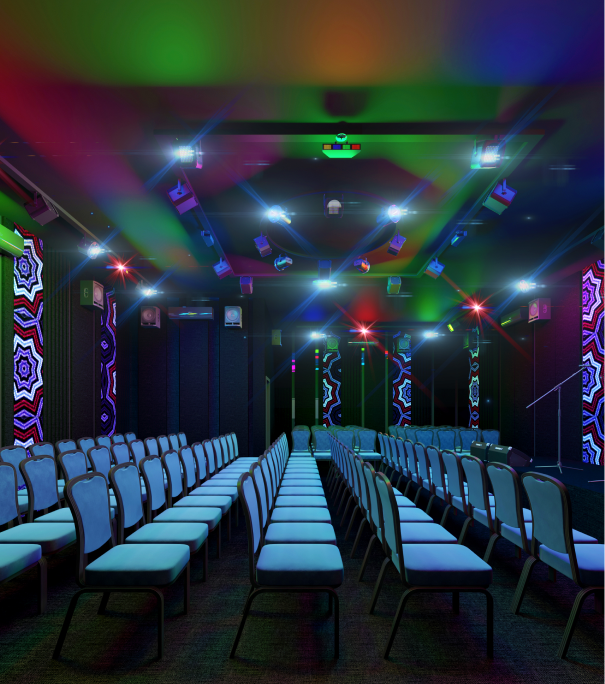
A major challenge encountered during the renovation of the existing building was the extent of demolition required to accommodate the new design requirements. The existing structural arrangement did not support the client’s need for larger, more efficient office spaces and an open studio on the top floor. To create a column-free interior space capable of supporting multiple functions, extensive structural modifications were necessary. Traditional reinforced concrete columns would have limited the flexibility of the floor layout and obstructed the open studio concept envisioned by the client.
To address this challenge, a comprehensive structural redesign was implemented. Steel columns were introduced along the perimeter of the building, replacing conventional concrete columns in critical locations. In addition, a steel king-post structural system was incorporated to achieve longer spans and effectively redistribute loads. This innovative approach eliminated the need for intermediate columns, creating a spacious and unobstructed studio area while maintaining the structural integrity of the building. The solution not only enhanced the functionality of the space but also increased its commercial value by providing greater flexibility for future tenants.
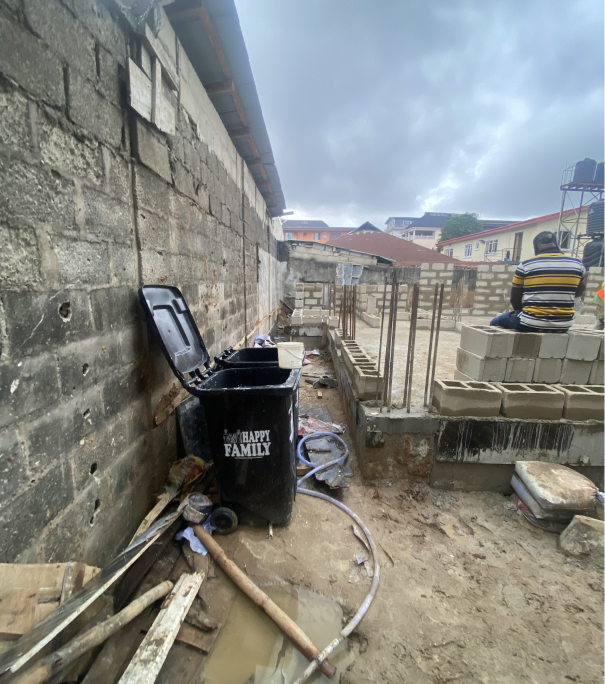
Another significant issue during the renovation phase was the management of demolition debris. The extensive removal of existing structural and architectural elements generated large volumes of waste material that needed to be efficiently handled without disrupting ongoing construction activities. Limited site access further complicated debris evacuation and disposal operations.
To overcome this challenge, demolition works were carefully phased and coordinated with waste management operations. Debris was regularly sorted, removed, and transported off-site to prevent congestion and maintain safe working conditions. This systematic approach ensured that construction activities proceeded efficiently while minimizing environmental and operational disruptions.
The construction of the new three-story building introduced an additional layer of complexity. With the existing building occupying the front portion of the site, the available space for construction activities became extremely limited. The site quickly became constrained as renovation works and new construction progressed simultaneously. Material storage, equipment movement, worker circulation, and site safety all required careful management within a restricted working environment.
A detailed logistics and site management strategy was therefore developed to maximize the efficient use of available space. Construction activities were carefully sequenced to avoid conflicts between trades, while materials were delivered on a just-in-time basis to reduce the need for large storage areas. Continuous coordination among contractors, consultants, and project managers helped maintain productivity and ensure that work progressed smoothly despite the physical limitations of the site.
Perhaps the most demanding challenge was the project timeline. The client required completion of both the renovated building and the new three-story structure within a six-month period, driven by an urgent need to occupy the premises and commence operations. Such an aggressive schedule demanded exceptional planning, coordination, and execution across all stages of the project.
To meet this deadline, an accelerated project delivery approach was adopted. Design coordination, procurement, and construction activities were strategically overlapped where possible to reduce delays. Long-lead materials, particularly structural steel components, were procured early to avoid supply chain disruptions. Frequent progress meetings and continuous monitoring of project milestones enabled the team to quickly identify and address potential issues before they affected the overall schedule.
Despite the considerable challenges associated with structural modifications, demolition management, limited site space, and a compressed delivery programme, the project was successfully completed through innovative engineering solutions, effective project management, and strong collaboration among all stakeholders. The introduction of steel structural systems enabled the realization of flexible, open-plan spaces, while careful logistical planning and accelerated construction strategies ensured that the development was delivered in line with the client’s vision and operational requirements. The project stands as a demonstration of how complex redevelopment challenges can be transformed into opportunities for innovation, efficiency, and value creation.
[ RESULTS ]
Understanding the Vision
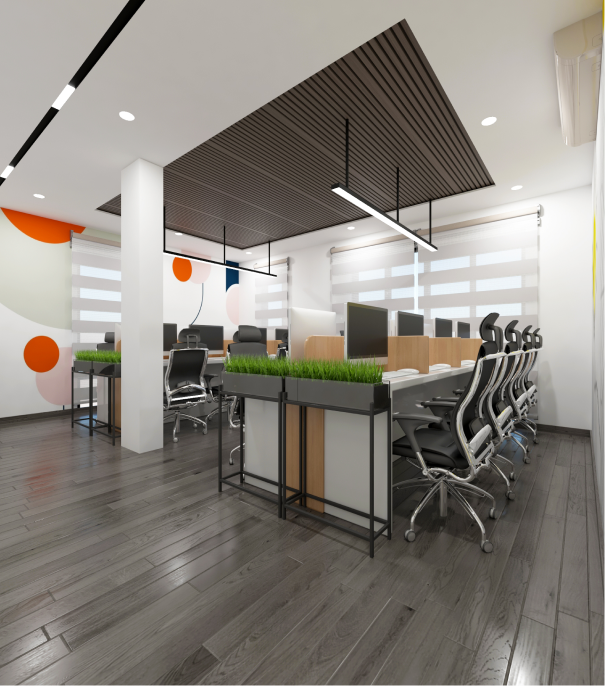
The project’s interior design was conceptualized to create a modern, functional, and visually appealing corporate environment that enhances productivity, collaboration, and user comfort. The design integrates contemporary minimalist principles with efficient spatial planning to achieve a balance between aesthetics and functionality.
The spatial arrangement emphasizes openness, flexibility, and smooth circulation through an open-plan office layout, strategically organized workstations, and glass partitions that maintain visual connectivity while ensuring privacy and acoustic control. Wide circulation paths and breakout areas further improve accessibility and user experience within the workspace.
A contemporary minimalist design language was adopted, characterized by clean lines, refined finishes, neutral color palettes, and carefully coordinated materials. Modern ceiling treatments with recessed strip lighting and suspended fixtures enhance the spatial depth and sophisticated corporate atmosphere.
Biophilic design elements were incorporated through indoor plants and integrated greenery to promote wellbeing, improve indoor air quality, and create a more refreshing and comfortable environment. Lighting was also treated as a major design feature, combining natural daylight with layered artificial lighting systems to achieve visual comfort, warmth, and elegance.
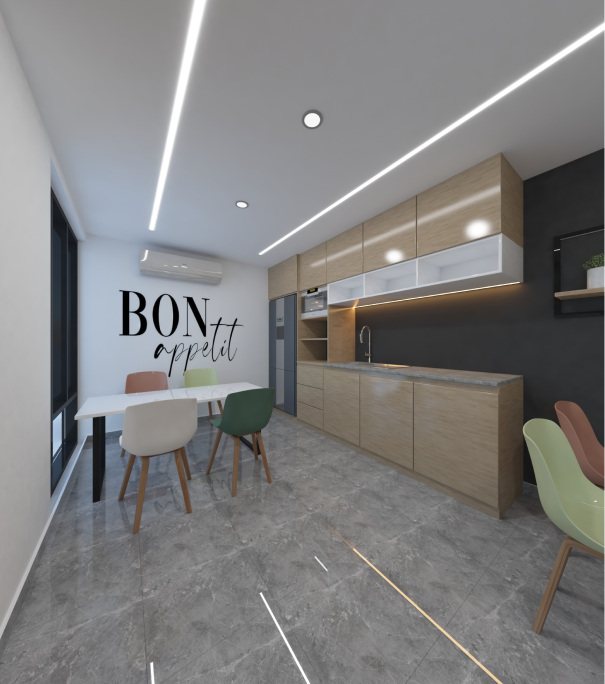
Executive offices and reception areas were designed to project professionalism, luxury, and strong corporate identity through premium finishes, feature walls, modern furniture, and accent lighting. Additionally, the cafeteria and informal interaction spaces were designed as welcoming relaxation zones that encourage social engagement and staff comfort while maintaining consistency with the project’s overall contemporary aesthetic.
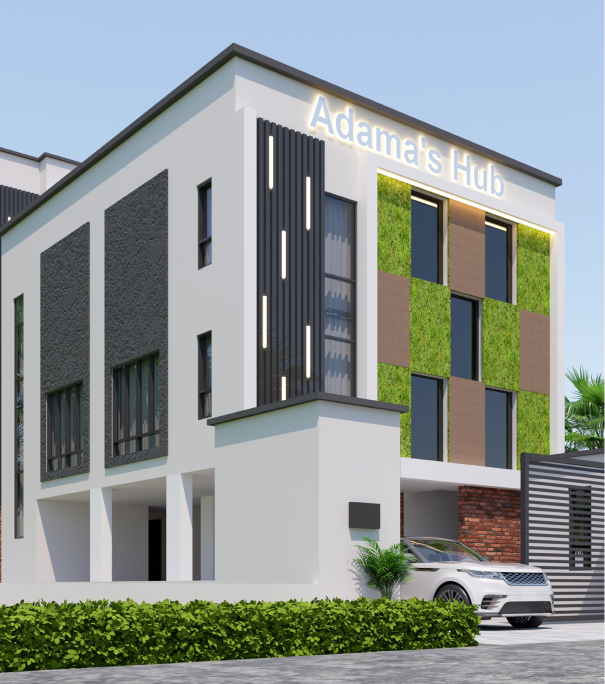
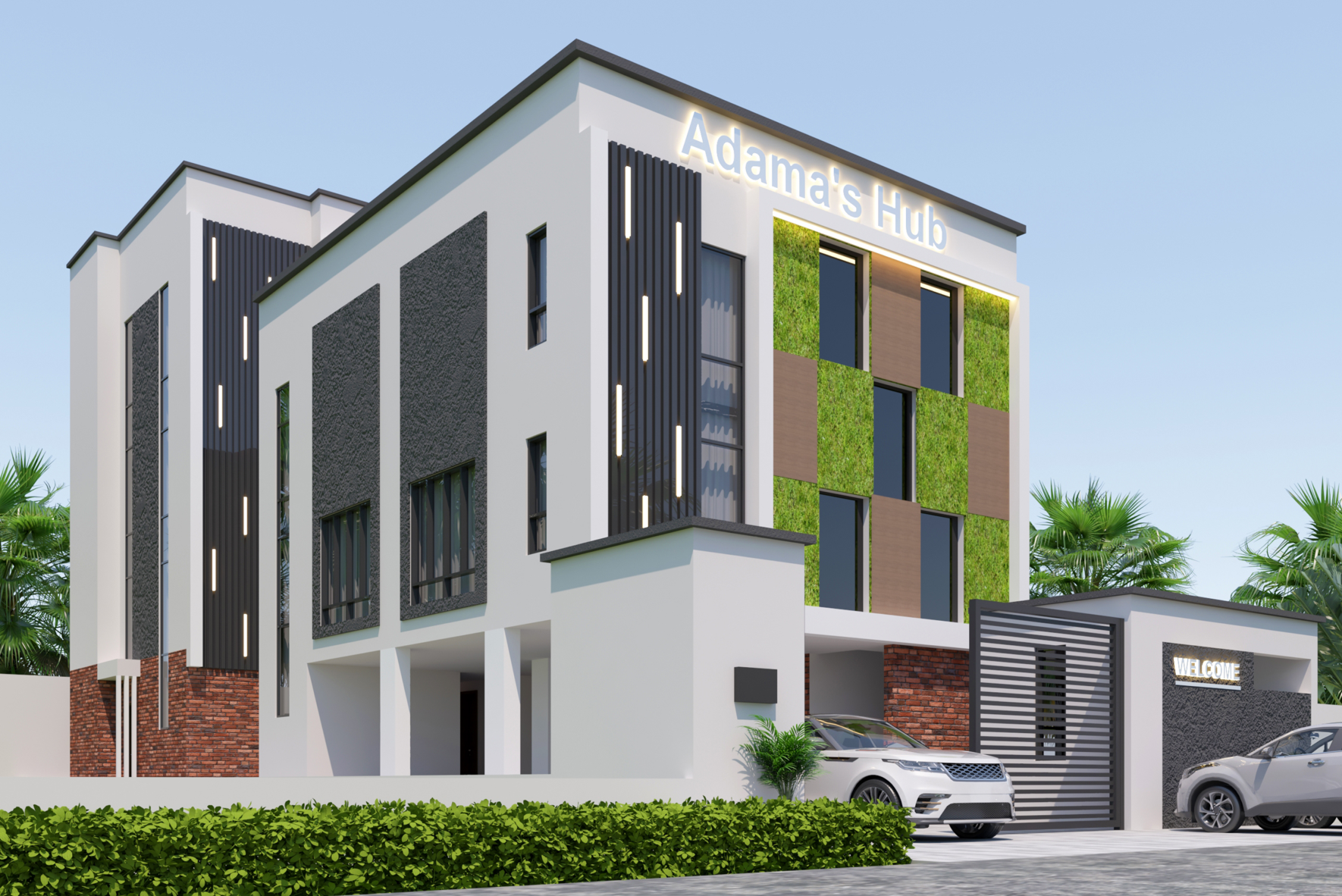
The exterior concept adopts a contemporary architectural style characterized by asymmetrical forms, vertical emphasis, and bold geometric compositions. The building massing was carefully articulated to create a visually striking façade while maintaining functional efficiency internally. The interplay of solid and void elements creates rhythm and balance across the elevation, while vertical façade treatments visually increase the perceived height of the building.
The façade design combines multiple textures and materials to achieve visual dynamism and architectural elegance. Neutral tones such as white, grey, and black dominate the exterior palette, creating a timeless and modern appearance. Vertical fins and textured façade panels were introduced to break monotony and enhance depth within the elevation composition. Green wall elements were strategically incorporated to soften the façade and establish a connection between architecture and nature. The signage placement at the upper façade reinforces the corporate identity of the development while ensuring visibility and brand recognition.
The entrance design emphasizes accessibility, security, and visual appeal. The gatehouse and entrance canopy were designed with modern lines and complementary materials to create a unified architectural language with the main building. The wide driveway and parking arrangement ensure smooth vehicular movement and ease of access for users and visitors.
[ PROJECT GALLERY ]