[INTRODUCTION ]
Understanding the Vision
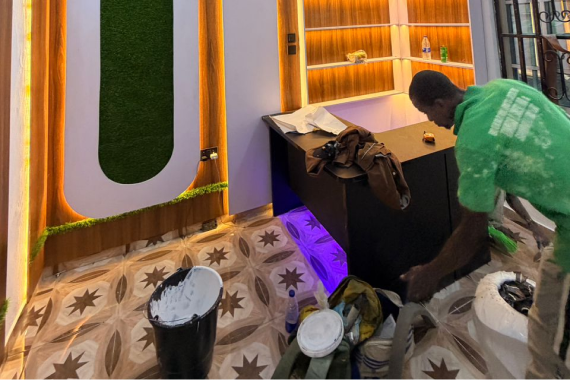
The design concept for this private office was carefully developed to embody modern sophistication, functionality, and a calm professional atmosphere. The primary objective was to create a workspace that not only supports productivity and efficiency but also reflects a strong corporate identity through thoughtful spatial planning, material selection, and contemporary design elements.
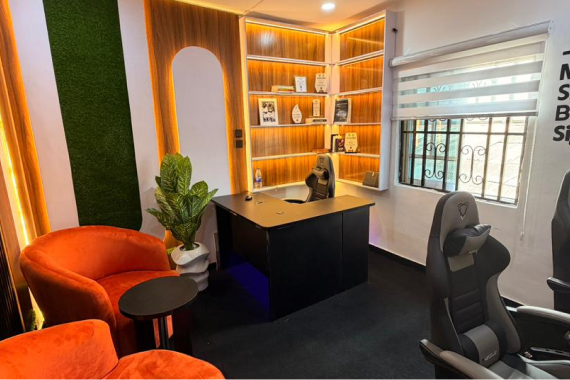
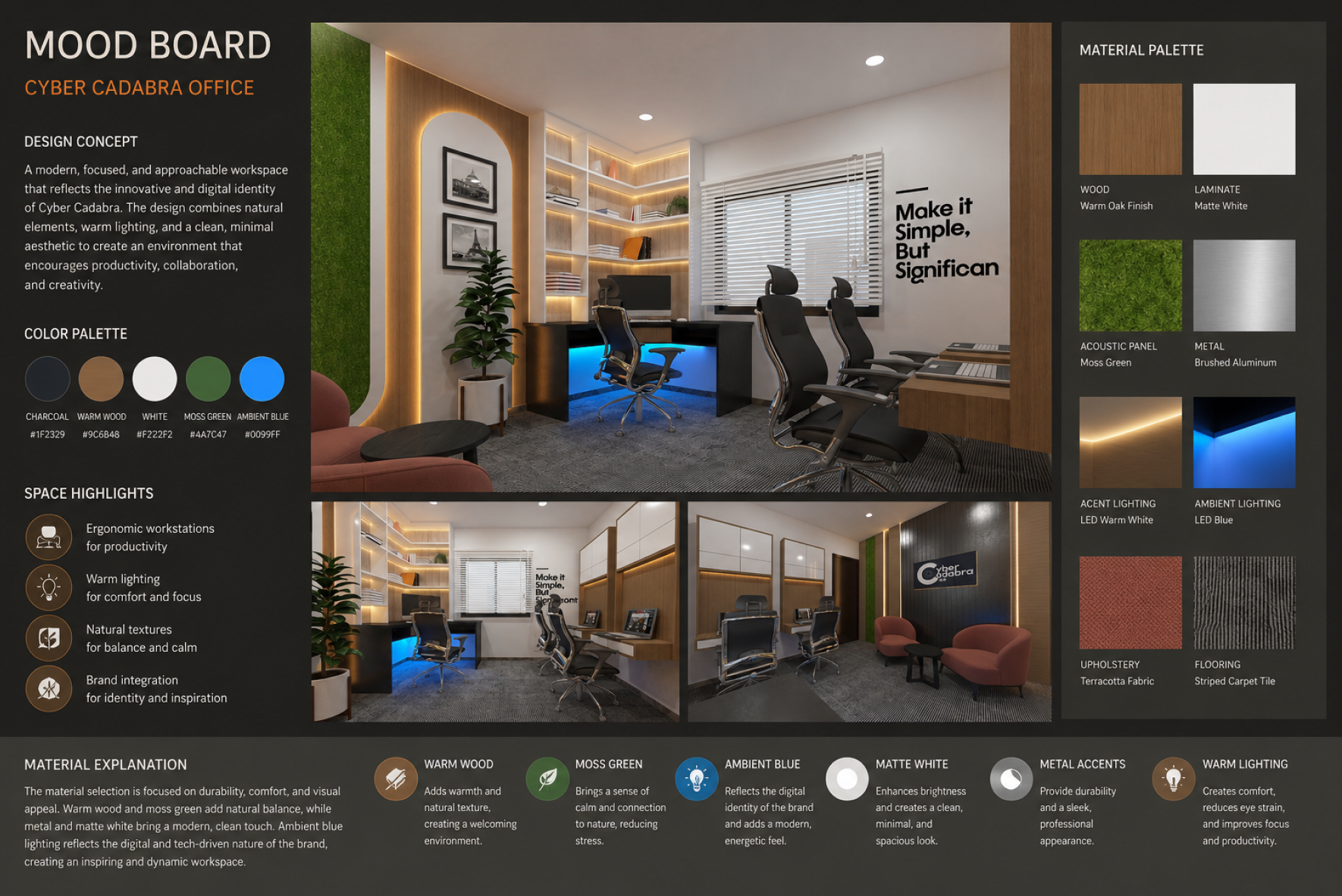
The office adopts a clean-lined contemporary aesthetic characterized by simple geometric forms, seamless detailing, and integrated lighting solutions. A carefully curated material palette combines warm wood finishes with matte black accents, soft fabric upholstery, and natural greenery, creating a harmonious balance between professionalism and comfort. This combination of materials introduces warmth into the space while maintaining a refined and elegant corporate appearance.
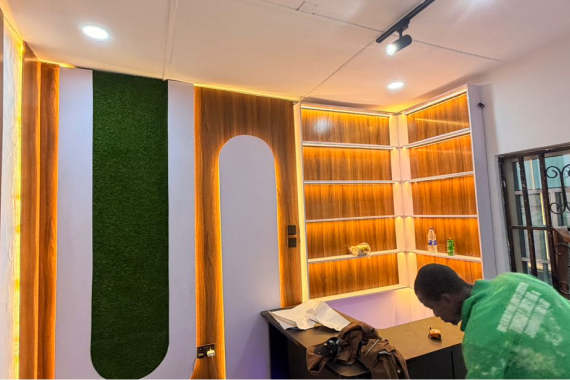
A key feature of the design is the strategic use of concealed LED strip lighting, which enhances the architectural elements of the interior by creating depth, visual interest, and ambiance. The lighting design contributes significantly to the overall atmosphere, producing a sophisticated environment that feels both welcoming and contemporary.
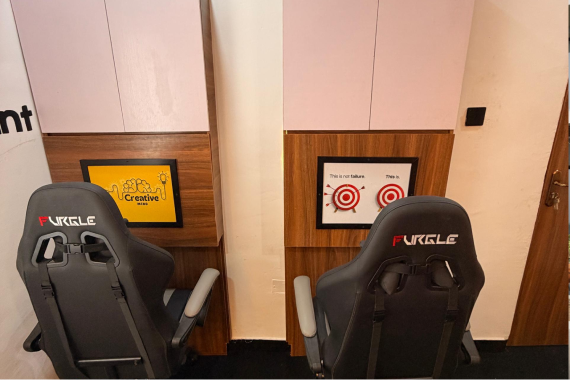
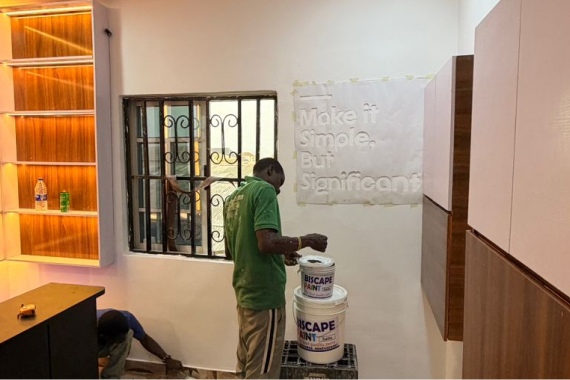
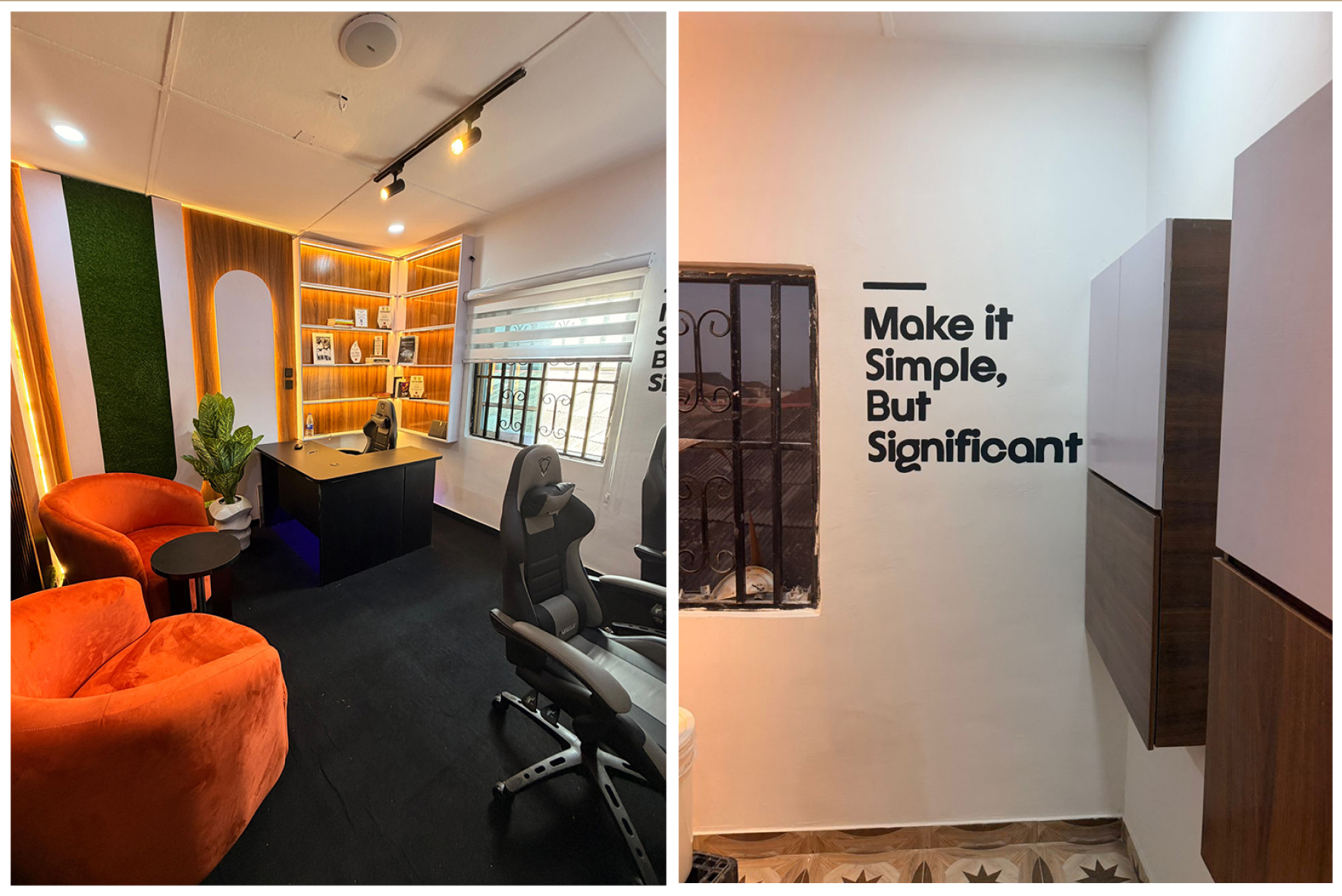
Central to the design intent was the creation of a workspace that inspires creativity while maintaining a professional setting. Custom-designed shelving units, illuminated feature walls, and a prominent branded focal wall establish a strong visual identity, reinforcing the company’s innovative and forward-thinking image. Additionally, motivational typography elements incorporated into the interior further enhance the creative character of the office and encourage a positive work culture.
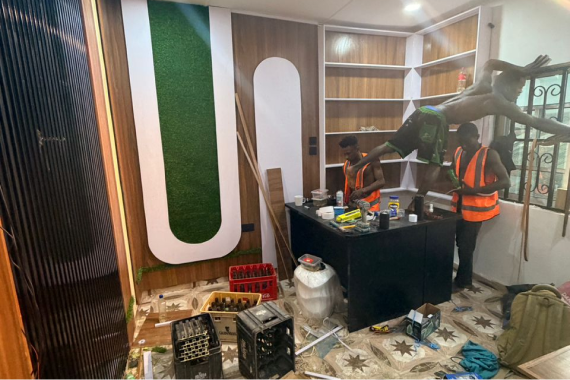
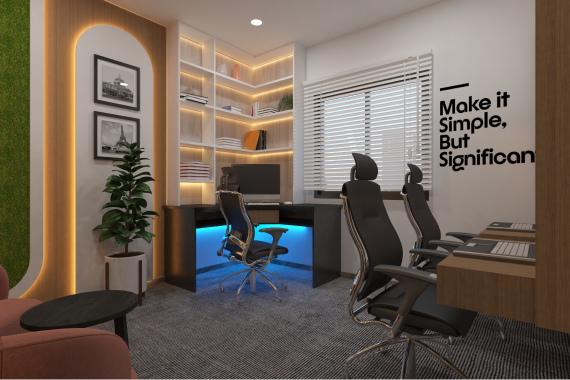
The integration of biophilic design principles through green wall panels and indoor plants introduces a natural dimension to the space. These elements soften the modern finishes, improve visual comfort, and contribute to a healthier and more engaging work environment. The presence of greenery creates a sense of freshness and tranquility, supporting employee well-being and reducing the visual rigidity often associated with corporate interiors.
Overall, the design successfully achieves a balance between corporate professionalism and contemporary elegance while prioritizing user comfort and operational efficiency. Through the thoughtful integration of modern materials, architectural lighting, brand-focused features, and natural elements, the office delivers a workspace that is functional, aesthetically appealing, and reflective of the organization’s values and aspirations.
The completed design effectively fulfills the project’s core objectives by promoting:
● Corporate professionalism
● Contemporary elegance
● User comfort and well-being
● Efficient functionality and productivity
● Strong brand representation and identity
The result is a sophisticated and inspiring office environment that supports business performance while providing a comfortable and engaging experience for its users.
[Challenges]
Color, Material & Palette Selection
One of the primary design challenges encountered during the development of this office interior was the need to accommodate three distinct functional zones within a compact 11-square-meter space. The client’s requirements included a private executive workspace, two staff workstations, and a dedicated podcast recording area, all within a limited floor area. Achieving this level of functionality while maintaining comfort, circulation efficiency, and a professional aesthetic required careful spatial planning and innovative design solutions.
The major challenge was preventing the space from feeling overcrowded while ensuring that each function retained its own identity and purpose. Given the limited dimensions of the office, conventional space allocation methods would have resulted in a congested environment with restricted movement and reduced user comfort. To address this, the design adopted a highly efficient layout strategy that maximized every available square meter without compromising usability.
The executive workspace was positioned strategically in a corner location where a custom-designed workstation with integrated shelving could take advantage of otherwise underutilized space. This arrangement created a semi-private office environment while minimizing its impact on the overall circulation pattern. The integrated storage solutions further reduced the need for additional furniture, helping to preserve valuable floor area.
The two staff workstations were carefully organized along the perimeter of the office to maintain visual connectivity and encourage collaboration while keeping the central area open. This approach allowed both staff members to work comfortably without interfering with circulation routes or creating visual clutter. The placement of the desks also ensured direct access to storage and work tools while maintaining a sense of openness within the office.
Perhaps the most challenging aspect of the design was incorporating a podcast recording zone within the same multifunctional environment. Podcast spaces typically require a degree of privacy, acoustic consideration, and visual distinction from standard office activities. Rather than creating a fully enclosed room, which would have consumed significant space, the design integrated the podcast area as a dedicated feature zone distinguished through architectural treatments, strategic furniture placement, ambient lighting, and branding elements. This allowed the podcast setup to function effectively while remaining visually connected to the overall office environment.
Another critical challenge was maintaining clear circulation paths between all functional zones. With multiple activities occurring within a relatively small footprint, it was essential to prevent conflicts between movement, work processes, and recording activities. Through careful furniture arrangement and the deliberate preservation of an open central floor area, the design successfully established efficient movement pathways that enhance accessibility and user comfort.
The successful integration of these three functional components within an 11-square-meter office demonstrates the effectiveness of thoughtful space planning and multifunctional design strategies. Despite the spatial limitations, the final result provides a fully operational executive office, collaborative staff workspace, and professional podcast recording area within a cohesive, visually appealing, and highly efficient environment. The project ultimately showcases how intelligent design can transform a compact space into a dynamic workplace that supports productivity, creativity, communication, and brand identity.
[ RESULTS ]
Understanding the Vision
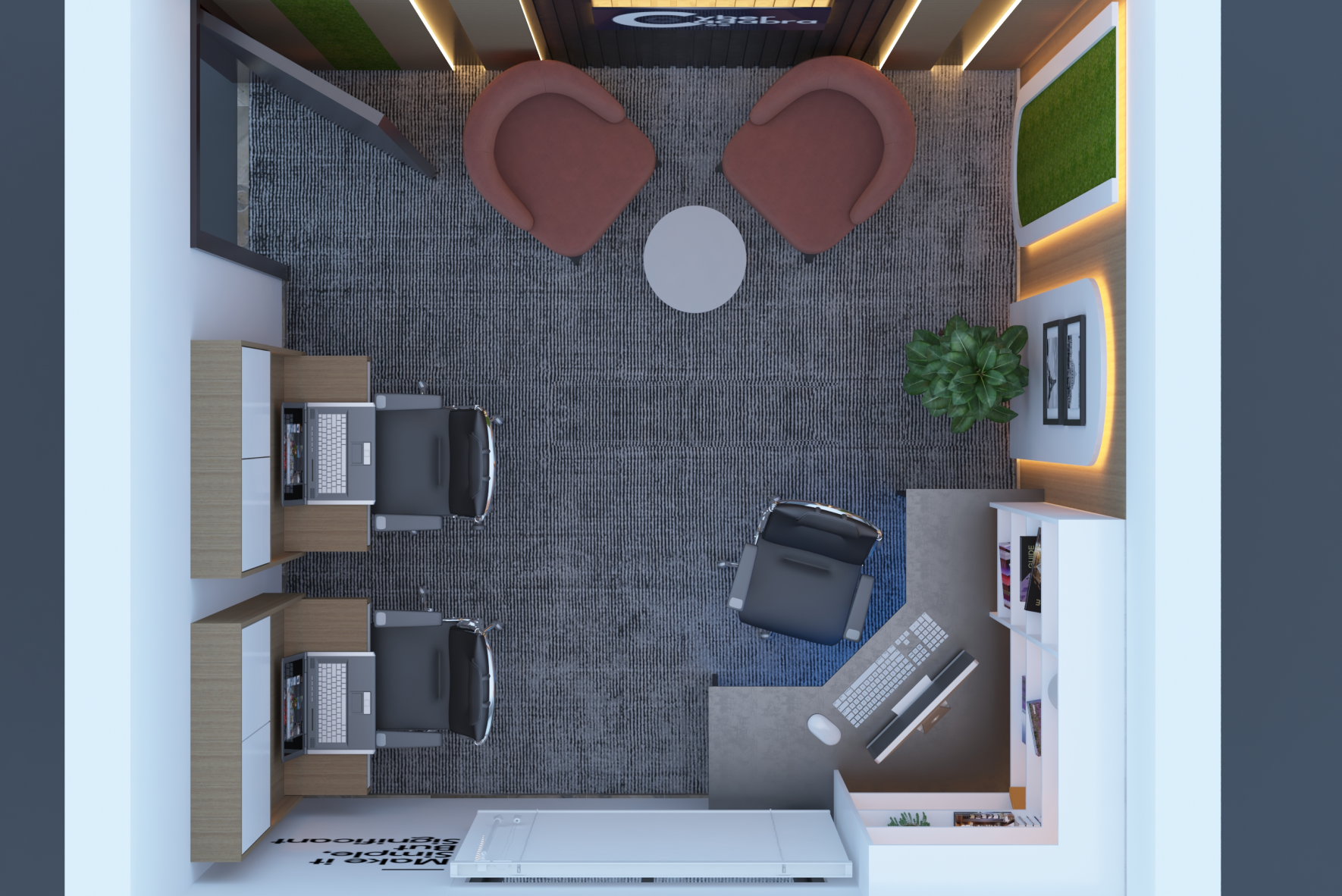
The office layout was carefully designed to maximize functionality, circulation efficiency, visual balance, and user comfort within the available floor area. Every element of the space was strategically planned to create a productive working environment while maintaining a refined and professional aesthetic.
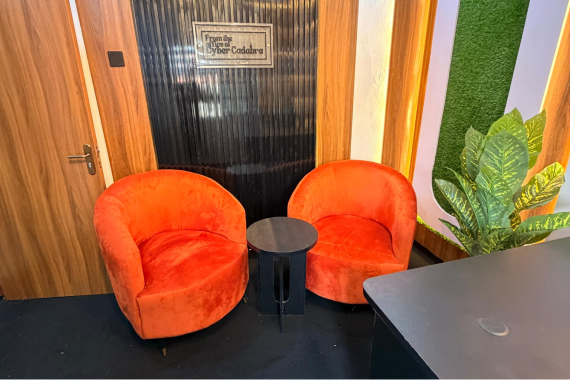
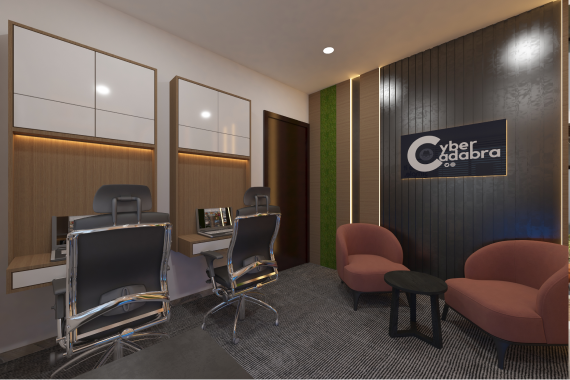
Upon entering the office, visitors are welcomed into a compact yet inviting reception lounge that serves as the first point of interaction. The reception area features two upholstered lounge chairs arranged symmetrically around a central coffee table and positioned against a branded feature wall. This composition establishes an immediate sense of professionalism while reinforcing the company’s identity. The balanced arrangement of furniture creates a welcoming atmosphere for guests and contributes to a strong visual first impression.
Beyond the reception area, the primary workspace has been organized to support efficient daily operations, collaboration, and ease of movement. Workstation desks are strategically positioned along the perimeter walls, allowing the central area of the office to remain open and uncluttered. This layout enhances circulation throughout the space while ensuring direct access to storage solutions and work tools. The arrangement also provides adequate personal workspace for users and maintains visual connectivity among team members, encouraging communication and collaboration without compromising individual comfort.
Serving as the focal operational zone of the office is a custom-designed executive corner workstation with integrated shelving. The corner placement maximizes the utilization of available space while creating a semi-private working environment suitable for focused tasks and managerial functions. The overhead shelving units provide practical storage while also offering opportunities for decorative displays. In addition, they visually frame the workstation and contribute to the overall design through integrated ambient lighting that enhances the atmosphere of the workspace.
Architectural wall treatments and branding elements have been strategically incorporated to create focal points and strengthen the office’s visual identity. The branded feature wall acts as a prominent anchor within the reception area, while the illuminated niche wall introduces depth, sophistication, and visual interest. Green wall inserts have been carefully integrated throughout the design to soften the environment, break visual monotony, and introduce an organic texture that contributes to a more pleasant and engaging workspace.
A key consideration throughout the design process was the creation of efficient circulation and spatial flow. Furniture placement was carefully coordinated to maintain clear movement pathways, ensure functional accessibility, preserve spatial openness, and promote visual continuity throughout the office. The open central floor area prevents the space from feeling overcrowded and enhances the perception of spaciousness despite the office’s compact footprint.
The overall user experience is centered on supporting productivity, comfort, professional interaction, brand representation, visual appeal, and operational efficiency. Through the thoughtful integration of functional planning, contemporary design elements, and strategic spatial organization, the office successfully functions as both an efficient workplace and a refined corporate environment. The result is a space that reflects innovation, sophistication, and modern professionalism while meeting the practical needs of its users.
[ PROJECT GALLERY ]